QR codes have become a common part of our daily life. We can see them at shops, restaurants, exhibitions, factories, hotels, payment counters and many other places. Earlier, people often needed a salesperson to get complete information about a product or s
QR codes have become a common part of our daily life. We can see them at shops, restaurants, exhibitions, factories, hotels, payment counters and many other places. Earlier, people often needed a salesperson to get complete information about a product or service. Today, the situation has changed. You can simply take out your mobile phone, open a QR code scanner and scan the code. Within a few seconds, the required information appears on your mobile screen.
In the last few years, the use of QR codes has increased very quickly. We use QR codes for online payments, product information, website links, tickets, digital menus and many other purposes. QR code technology has made information sharing very fast and simple. But have you ever wondered how a QR code actually works? How does your payment app know where the money should go after scanning a QR code? How can a QR code be scanned from different angles? How does a damaged QR code sometimes still work? In this article, we will understand the complete working mechanism of a QR code with a simple real-life example.
What Is a QR Code?
A QR code is a type of two-dimensional barcode that can store information in a square-shaped pattern. The name QR stands for Quick Response. The main purpose of this technology is to provide fast access to stored information. When you scan a QR code using your smartphone camera or a QR scanner, the scanner reads the pattern and converts it into useful information.
QR codes can store different types of information. For example, a QR code can contain a website URL, contact details, text, payment information or other digital data. This is why QR codes are now used in many industries. A company can place a QR code on its product packaging. A restaurant can use it for a digital menu. A shopkeeper can use it for receiving digital payments.
The biggest advantage of a QR code is its speed and convenience. Users do not need to type long website addresses or manually enter payment details. They only need to scan the code. The information stored inside the QR code is then read by the scanning application. This simple process has made QR codes an important part of modern digital technology.
Why Are QR Codes So Popular Today?
The use of QR codes has grown rapidly in recent years. Today, QR codes are visible almost everywhere. From small local shops to large exhibitions, companies and factories, QR codes are being used to provide quick access to information. This has reduced the need for manual information sharing in many situations.
For example, imagine that you visit a product exhibition. Earlier, you might have needed to speak to a salesperson to know about a particular product. Now, you may simply find a QR code near the product. After scanning it, you can directly open the company's website or product page. You can read specifications, prices and other details on your smartphone.
The same technology is used in digital payments. At a shop or restaurant, you may see a QR code displayed near the payment counter. You open your payment application, scan the code and make the payment. The complete process takes only a few seconds. This is one of the biggest reasons why QR codes have become so popular.
A Simple Real-Life Example of QR Code Payment
Let us understand the working of a QR code with a simple real-life example. Imagine that on Valentine's Day in 2022, at around 5:40 in the evening, you receive a phone call from your friend. After talking for some time, your friend asks you to meet him. You both decide to go somewhere and spend some time together.
After reaching a place, your friend orders something and now it is time to make the payment. The shopkeeper shows you a QR code. You take out your smartphone and open the Paytm application. You then point the scanner toward the QR code and scan it.
Now a very important question comes to mind. How does the Paytm application know that the payment made through this QR code should reach the shopkeeper's account? How does the application identify the correct person or business? The answer is hidden inside the information stored in the QR code itself.
The QR code is not just a random collection of black and white boxes. Every part of the QR code has a specific purpose. The scanner first identifies the structure of the QR code. It then reads the stored information and processes it. After that, the payment application can identify the required payment details and complete the transaction.
Understanding the Data Structure of a QR Code
Before understanding the complete working mechanism of a QR code, it is important to understand its basic data structure. A QR code contains different types of patterns and information areas. Each section performs a specific function.
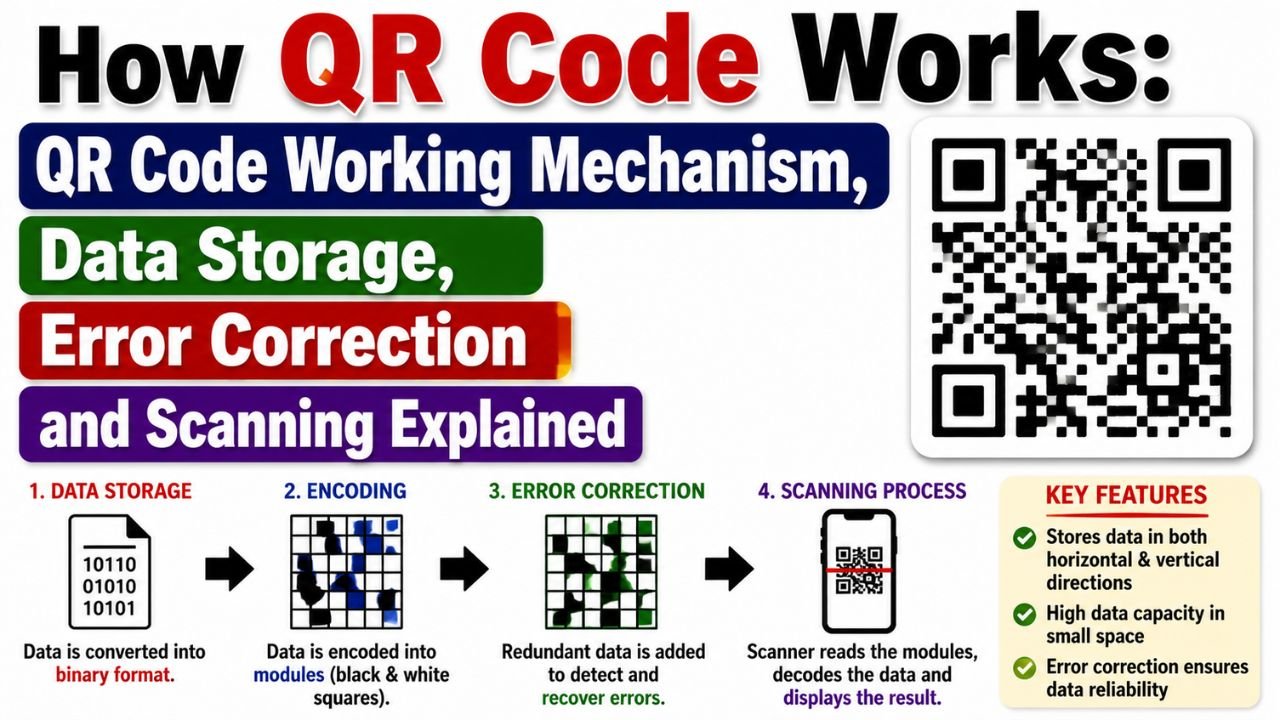
The black and white boxes that you see inside a QR code are called modules. These modules together represent the data stored inside the code. The scanner reads these modules in a specific order and converts them into meaningful information.
QR codes support different types of data storage methods. The main encoding modes include Numeric, Alphanumeric, Byte or Binary, and Kanji. The QR code uses the required encoding mode depending on the type of information being stored. This allows QR codes to store different kinds of data in an organized way.
What Are Position Detection Patterns?
When you look at a QR code, you will notice three large square patterns. One is generally located at the top-left corner, another at the top-right corner and the third at the bottom-left corner.
These large square patterns are known as Position Detection Patterns or Finder Patterns. Their main purpose is to help the scanner identify the QR code. They tell the scanning device where the QR code starts and how it is positioned.
These patterns are extremely important for accurate scanning. When you point your smartphone camera toward a QR code, the scanner first tries to detect these patterns. Once they are identified, the scanner can understand the basic orientation and position of the QR code.
How Can a QR Code Be Scanned From Different Angles?
You may have noticed that you can scan a QR code from different angles. It does not always need to be perfectly straight in front of your mobile camera. This is possible because of the special patterns included in the QR code.
The position detection patterns help the scanner understand the orientation of the QR code. The scanner can identify the location of the three major patterns and use them to understand how the code is placed.
This makes QR codes highly convenient. Even if the QR code is slightly rotated or viewed from a different angle, the scanner can often recognize its structure. The scanning system then processes the information accordingly.
What Are Alignment Patterns?
Apart from the three main position detection patterns, some QR codes also contain smaller square patterns called Alignment Patterns.
The main purpose of an alignment pattern is to help the scanner correctly understand the orientation and shape of the QR code. Depending on the size and version of the QR code, there may be more than one alignment pattern.
These patterns become especially useful when the QR code is large. They help the scanning system maintain accuracy while reading the code. This is another reason why QR codes can be scanned successfully even when the code is not perfectly aligned with the camera.
What Are Timing Patterns?
Another important part of a QR code is the Timing Pattern. These are the series of black and white modules that connect the main position detection patterns.
Timing patterns help the scanner understand the structure of the QR code grid. In simple words, they help the scanner identify where the rows and columns of the QR code are located.
The scanner uses these patterns to understand how the modules are arranged. This allows it to determine where the actual data is stored. Without this information, it would be much harder for the scanner to correctly read the black and white modules.
What Is the Format Information Area?
A QR code also contains a section called the Format Information Area. This area stores important information that helps the scanner understand how the QR code should be processed.
One important part of this information is related to Error Correction. Error correction is one of the most useful features of QR code technology. It allows a QR code to remain readable even when a part of the code is damaged or covered.
The format information also contains details related to the masking pattern. The scanner uses this information during the decoding process. It helps the system correctly interpret the data stored inside the QR code.
How Does Error Correction Work in a QR Code?
Imagine that a QR code printed on a poster becomes slightly damaged. Maybe some part of the paper gets dirty, torn or covered. You may still be able to scan the QR code successfully. This happens because QR codes use an error correction system.
QR codes can recover a certain amount of damaged or missing information depending on the selected error correction level. The technology uses additional data to help reconstruct the original information.
There are different error correction levels available in QR codes. The higher the error correction level, the more damage the QR code can handle. However, using a higher error correction level also requires more space inside the QR code.
This feature is very useful in real-world applications. QR codes printed on outdoor advertisements, product packaging or public boards may become dirty or damaged over time. Error correction can help the scanner recover the original information and read the QR code successfully.
What Is the Masking Pattern?
Another important concept in QR code technology is the Masking Pattern. The data inside a QR code is arranged in black and white modules. However, if the pattern becomes too difficult to read, the scanner may face problems.
To avoid this issue, a masking pattern is applied during the QR code creation process. The masking process changes the appearance of certain modules according to specific rules. This helps create a more balanced pattern that is easier for the scanner to detect.
The masking information is also stored as part of the QR code format information. During scanning, the scanner identifies the correct masking pattern and uses it to decode the original data.
How Does QR Code Scanning Actually Start?
When you open a QR scanner on your mobile phone and point it toward a QR code, the scanning process starts by identifying the main detection patterns.
The three large position detection patterns help the scanner understand the location and orientation of the QR code. The scanner then identifies the timing patterns and other structural information.
After understanding the complete structure, the scanner can determine where the actual data is stored. It then begins reading the encoded information from the QR code.
This entire process happens extremely quickly. In most cases, you do not even notice the different steps happening in the background. Within a few milliseconds, your mobile phone can identify and decode the information.
What Are Encoding Mode Indicators?
After the basic structure of the QR code is identified, the scanner needs to know what type of data is stored inside it.
This is where the Encoding Mode Indicator becomes important. QR codes can store data using different modes, including Numeric, Alphanumeric, Byte or Binary and Kanji.
The encoding mode indicator tells the scanner which data encoding method has been used. Once the scanner knows the encoding method, it can correctly interpret the following data.
For example, numerical data is processed differently from text or binary data. Therefore, identifying the correct encoding mode is an important step in the QR code decoding process.
What Is the Character Count Indicator?
After identifying the encoding mode, the scanner also needs to know how much data it needs to read.
The Character Count Indicator provides information about the number of characters or data units stored in the QR code. This helps the scanner understand where the actual data begins and how much information needs to be processed.
After reading this information, the scanner knows the type of data and its length. It can then move forward and decode the actual stored data.
This process is completed very quickly by the QR scanning software. That is why users normally see only the final result on their smartphone screen.
How Is Data Stored Inside a QR Code?
The actual data inside a QR code is stored using a specific pattern of black and white modules. The data is not stored like normal text that a human can directly read.
Instead, the information is converted into a digital representation. The QR code uses the selected encoding method to represent the data through modules.
The scanner reads these modules according to the QR code's structure. It starts from the correct location and follows the defined data reading pattern. The information is then decoded and converted back into a usable format.
This is how a QR scanner can take a complex-looking square pattern and turn it into a website link, payment information, text or another type of digital content.
Why Does a QR Code Look Like a Zig-Zag Pattern?
The data in a QR code is generally arranged in a specific pattern that may look like a zig-zag movement when explained from a technical point of view.
The scanner does not simply read every black and white box from left to right like normal text. Instead, it follows a defined path through the modules.
The structural patterns around the QR code help the scanner understand which areas contain functional information and which areas contain actual data. Once the scanner identifies these areas, it can follow the correct path to decode the stored information.
This organized structure is one of the reasons QR codes can store a large amount of information in a relatively small space.
How Does Paytm Know Where the Payment Should Go?
Now let us return to our payment example. You scan a QR code displayed by a shopkeeper using the Paytm application. The application needs to know where the payment should be sent.
The QR code contains the information required to identify the payment destination. When the scanner reads the QR code, the payment application decodes this information.
The application then displays the relevant payment details. Depending on the type of QR code, you may see the receiver's name or other information before completing the transaction. After you confirm the payment, the payment system processes the transaction and transfers the money to the intended account.
So, the QR code itself contains important information that helps the application understand the payment destination. The scanning application reads and processes this information within seconds.
QR Code Is an Advanced Version of Barcode
Many people compare QR codes with traditional barcodes. In simple terms, a QR code can be considered a more advanced form of barcode technology.
Traditional barcodes usually store information in one direction. QR codes, on the other hand, are two-dimensional. They can store information both horizontally and vertically.
Because of this two-dimensional structure, QR codes can store much more information than traditional one-dimensional barcodes. They can also be scanned quickly using smartphones and other scanning devices.
This has made QR codes useful for many applications, including payments, product information, website access, tickets, authentication and digital marketing.
QR Code vs Traditional Barcode
The main difference between a traditional barcode and a QR code is the way information is stored.
A traditional barcode usually consists of vertical lines and stores a comparatively smaller amount of information. A QR code uses a square grid of modules and can store more complex information.
QR codes can also be scanned from different orientations. Their detection patterns help scanners identify the code even when it is rotated.
Because of these advantages, QR codes have become increasingly common in modern digital systems. They are now used in places where traditional barcodes may not provide enough flexibility or information capacity.
Are There Technologies Faster Than QR Codes?
QR codes are highly useful and fast, but they are not the only technology used for storing and transferring information.
There are other technologies that can offer fast data access depending on the application. One example is NFC, or Near Field Communication. NFC allows devices to exchange information when they are brought very close to each other.
Unlike a QR code, which normally requires a camera to scan a visible pattern, NFC works through short-range wireless communication. This makes it convenient for contactless payments and other applications.
However, QR codes still have one major advantage. They are inexpensive and easy to print. A business can create a QR code and display it almost anywhere without needing special hardware.
QR Codes in Digital Payments
One of the biggest uses of QR codes today is digital payment. Payment applications have made QR code payments simple for millions of users.
A customer can open a payment application, scan the merchant's QR code and enter the payment amount. The application reads the required information from the code and prepares the transaction.
This system reduces the need to manually enter account information. It also makes payments convenient for small shops, restaurants, street vendors and large businesses.
The growth of QR code payments shows how a simple technology can become an important part of the digital economy.
QR Codes in Exhibitions and Factories
QR codes are also widely used in exhibitions and industrial environments. A company can display a QR code next to a machine or product.
Visitors can scan the code to access detailed information. They may be directed to a website, product catalog, technical specifications or a contact page.
This reduces the need for salespeople to explain every product individually. The customer can access information directly using a smartphone.
Factories and businesses can also use QR codes for inventory management, equipment identification and tracking. This makes QR codes useful not only for customers but also for internal business operations.
QR Codes in Marketing and Advertising
QR codes have also changed digital marketing. Businesses can print QR codes on posters, newspapers, packaging and advertisements.
A customer who is interested in a product can scan the code and directly visit the company's website or product page. This creates a simple connection between offline advertising and online information.
For marketers, QR codes can also help make advertisements more interactive. Instead of remembering a website address, users can simply scan the code and continue their digital journey.
Important Points About QR Codes
- QR stands for Quick Response.
- QR codes are two-dimensional barcodes.
- They can store different types of information.
- Common encoding modes include Numeric, Alphanumeric, Byte or Binary and Kanji.
- Three main position detection patterns help identify the QR code.
- Alignment patterns help with orientation and accuracy.
- Timing patterns help identify rows and columns.
- Format information contains important decoding details.
- Error correction helps recover damaged data.
- Masking patterns help create a readable QR code structure.
- Data is stored using black and white modules.
- QR codes can be scanned from different angles.
- QR codes are widely used for digital payments.
- They are used in marketing, exhibitions, factories and product packaging.
- QR codes can store more information than traditional one-dimensional barcodes.
- NFC is another technology used for fast contactless communication.
Final Conclusion: How Does a QR Code Work?
A QR code may look like a simple square filled with black and white boxes, but its internal structure is much more advanced. Every important section has a specific purpose. The position detection patterns help the scanner find the code. Alignment patterns help with orientation. Timing patterns help identify the grid. Format information provides details needed for decoding. Error correction helps recover information if the code is damaged.
When you scan a QR code, the process happens very quickly. The scanner first identifies the structure of the code. It then determines the encoding mode and data length. After that, it reads the stored information from the modules and decodes it. In the case of a payment QR code, the decoded information helps the payment application identify the payment destination.
This is why QR code technology has become such an important part of modern life. From paying at a small shop to accessing information at a large exhibition, QR codes have made digital interaction faster and easier. The next time you scan a QR code, remember that behind that simple square pattern, there is a complete data structure and decoding system working within seconds.